Fund the experiments that could explain consciousness.
Could an AI be conscious? Does experience need quantum physics? We are raising funds to test the leading theories of how consciousness arises.
$126,097raised toward $1M by 31 December 2026
Phase 1 - Raising
Phase 2 - Experiments
+313 backers·1 proposal
Tax deductible on qualifying contributions
A tubulin in a microtubule, in two states at once. As they pull apart, gravity makes the superposition unstable and it reduces to one. Orch OR proposes this is a moment of experience. Slowed down. Schematic.
Consciousness is an open problem
1
What it is
Science can measure what a brain does. Whether, and what, it feels can only be reported, and there is no agreed test for it.
Orch OR: a stream of discrete moments, each one a quantum event.
2
Where it arises
Leading theories point to different places: networks spanning the brain, the back of the cortex, or structures inside neurons. Tests have not settled it.
Orch OR: inside neurons, in microtubules, timed by brain rhythms.
3
Whether it needs quantum physics
Most neuroscientists expect ordinary neural activity to be enough. Others argue it is not, against the objection that the brain is too warm for quantum states to last.
Orch OR: yes: experience comes from quantum states that gravity makes collapse.
4
Whether it can be computed
If it can, a computer running the right program would be conscious. If not, a brain does something no computer does. Q2 asks how to tell.
Orch OR: no: understanding, Penrose argues, is not an algorithm.
Consciousness science, so far
1974
Thomas NagelA problem
1974: An organism is conscious if there is something it is like to be it: a point of view that physical theories seem to leave out.
1989: Penrose argues from Gödel’s theorem that human understanding is not computable, and looks to a future theory of quantum gravity. Logicians widely dispute the argument.
2001: The global neuronal workspace: information becomes conscious when it is amplified into a sudden, brain-scale state that makes it widely available.
2023: Nineteen researchers turn leading theories into indicators to check AI against. Their analysis suggests no current system is conscious, and finds no obvious barrier to building one that meets them.
2025: Integrated information and global workspace theory, tested head to head: results challenge key predictions of both. First shown in 2023, when Koch lost a 25-year bet to Chalmers.
Cogitate Consortium (Mudrik, Melloni et al.), Nature[30,31]
Unanswered questions about consciousness
TubulinAnestheticOscillationAnesthetic settling into the microtubule wall and damping a modelled oscillation.
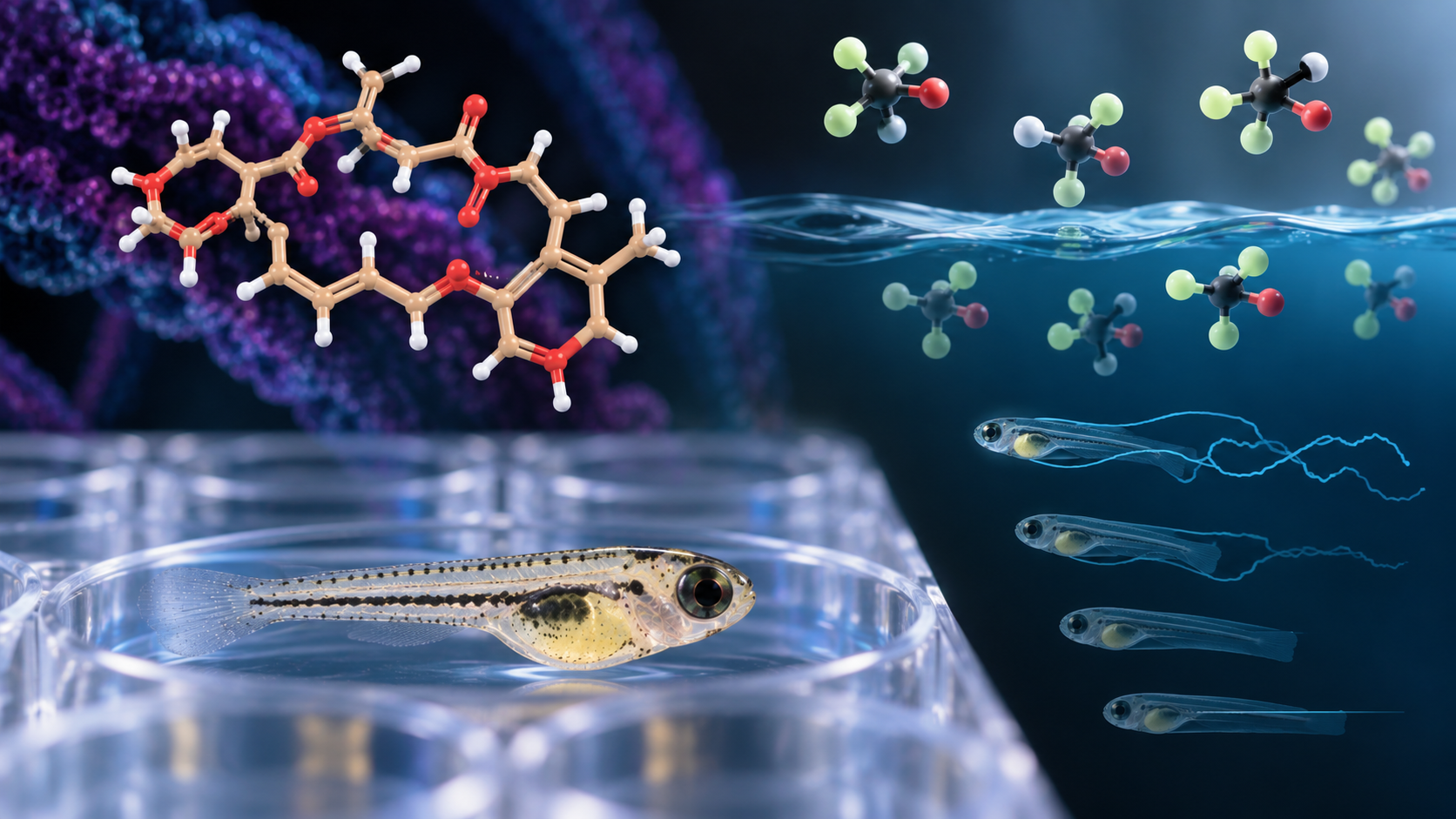
Q1: Do anesthetics switch off consciousness through microtubules?
Rats given a microtubule-stabilising drug took about a minute longer to go under (2024), and xenon isotopes with nuclear spin were weaker anesthetics in mice (2018). Neither result has been replicated.[11,12]
Would support it: Both effects replicate across labs and anesthetics.
Would count against it: Replications fail, or ordinary pharmacology explains them.
Recently funded
Examples of experiments on this question funded on ResearchHub.
Symbols on the tapeRead/write headThe picture it computesA Turing machine writing one symbol per step; each symbol is the size of one dot, so row by row the steps compute a picture of a sunset. Whether a machine running them could ever see it is the question. Schematic.
Q2: Could an AI be conscious by computing alone?
Today’s AI computes. On some leading theories, a computer running the right processes would be conscious; on others, no conventional computer would be, whatever it ran. Penrose argues from Gödel’s theorem that computing alone cannot give understanding, an argument logicians widely dispute. Either answer would change how AI is built, and how we treat what we build.[21,22,23,24,25]
Would support it: Experience tracks only the computation a brain performs: change the physics, keep the computation, and nothing changes.
Would count against it: Experience depends on physical properties a computation leaves out, such as the quantum states in Q3–Q5.
TubulinEmitting on their ownEmitting in stepA microtubule, its open end showing 13 strands round a hollow core. Tryptophans emitting on their own glow faintly; in step, they flash brighter and faster (superradiance). Schematic.
Q3: Do microtubules hold quantum states at body temperature, in living cells?
In the lab, light energy travels further along microtubules than expected (2023), and tryptophan networks in tubulin radiate together, a quantum optical effect called superradiance (2024). Neither has been seen in a neuron.[8,9]
Would support it: The same effects measured in living neurons, and replicated.
Would count against it: They vanish in cells, or a classical model explains them.
Place APlace BBoth at onceThe two published estimates on one clock: how long a state in two places at once lasts among jostling water molecules before it settles into one place.
Q4: How long can a quantum state survive in a warm, wet brain?
Estimates run from 10⁻¹³ s to 10⁻⁵–10⁻⁴ s, against the roughly 25 ms the theory first needed. Nobody has measured it in a neuron.[2,3]
Would support it: A measured lifetime near 10⁻⁵ s or longer.
Would count against it: A measured lifetime near 10⁻¹³ s.
Geometry AGeometry BAfter collapseOne mass in two places bends spacetime two ways; Penrose proposes one wins. Never observed.
Q5: Does gravity collapse quantum states at the rate Penrose predicts?
An underground test in 2020 ruled out the simplest gravity-collapse model. Penrose’s own version survives, and sharper tests are being prepared.[6,7]
Would support it: A collapse signature at the predicted rate, τ ≈ ħ/EG.
Would count against it: Bounds that rule out Penrose’s version too.
SpikesGamma cycleSummed fieldNeurons drifting from scattered firing into a 40 Hz gamma rhythm, slowed a hundred times.
Q6: If these states exist, do they change what neurons do?
The theory ties collapses to brain rhythms such as 40 Hz gamma. No causal path from a microtubule’s quantum state to a neuron firing has been shown.[1,19]
Would support it: Perturbing microtubule states shifts firing or gamma rhythm as predicted.
Would count against it: No effect on firing, or brain microtubules built wrong for the theory.
Have a different idea?
These questions are a start, not a limit. Any rigorous proposal on how consciousness arises is welcome, quantum or not: an experiment we did not list, a replication, a critique, or a new theory with a way to test it. Each is judged on the same terms.
How it works
You
1
You fund the call
Any amount, alongside every other backer.
2
Scientists submit proposals
Labs post their methods, budget, and what would prove them wrong.
3
Peers review, the best get funded
Open review on ResearchHub decides where the money goes.
4
Results are published
Data and code go public, whichever way they point.
Proposals
Two phases
Phase 1Now
Raise $1,000,000 by 31 December 2026
$126,097raised13% · 13 backers · 35 days left
Where it goes
Only to research funded under this call.
If it falls short
Everything raised still funds experiments under this call; we fund fewer of them.
Tax receipts
Qualifying contributions go to the ResearchHub Foundation’s fund at Endaoment, a 501(c)(3) public charity, and are generally tax-deductible in the US.
Phase 2Next
Pick proposals, run the experiments
Reviewers score the proposals in the open. The strongest get funded, and the results are published.
Proposals
Open until 31 December 2029
Review
In the open on ResearchHub, by peer reviewers
Awards
$50k – $250k each
About ResearchHub
Where this call is hosted
ResearchHub is an open science platform where researchers publish, peer review, fund and discuss scientific research. Its mission is to accelerate the pace of scientific research.
It is built for reproducible science: researchers publicly register their study design before they start, locking in their methods, and publish openly, with no paywalls.
Thinking about a larger gift, want to know exactly how the money will be used, or run a lab that could take on one of these experiments? We would like to hear from you.
It says, before the data, what result would count against its own view. It is pre-registered, reruns a single-lab claim before building on it, shares data and code, and is sized to the question. A collaborator who expects the opposite outcome makes it stronger.
Is this only for work on Orch OR?
No. Orch OR is where the questions start, but any rigorous work on how consciousness arises is in scope, quantum or not. Critics are funded on the same terms as supporters, and a well-run null result is a result.
Is theory-only work in scope?
Yes, when it makes a claim testable or tests one: a calculation of EG for tubulin, a decoherence model both sides accept, a formal analysis of the Gödel argument, or a way to tell theories’ predictions apart.
Who can apply?
Anyone with a rigorous plan: university labs, institutes, independent researchers and companies, in any country and at any career stage. Teams that include people who expect different outcomes are welcome.
How large are awards, and is overhead allowed?
Awards range from $50k to $250k, sized to the experiment. Indirect costs of up to 10% are allowed.
How are decisions made?
Proposals are published on ResearchHub and peer reviewed in the open. The ResearchHub Foundation picks which to fund, guided by those reviews.
What about IP and publishing?
Researchers keep their IP. Funded work is published openly on ResearchHub, with its data and code, whatever the result.
Where does my money go?
Only to proposals funded under this call: the experiments and theory that test these questions. Everyone who gives builds the call’s budget together.